


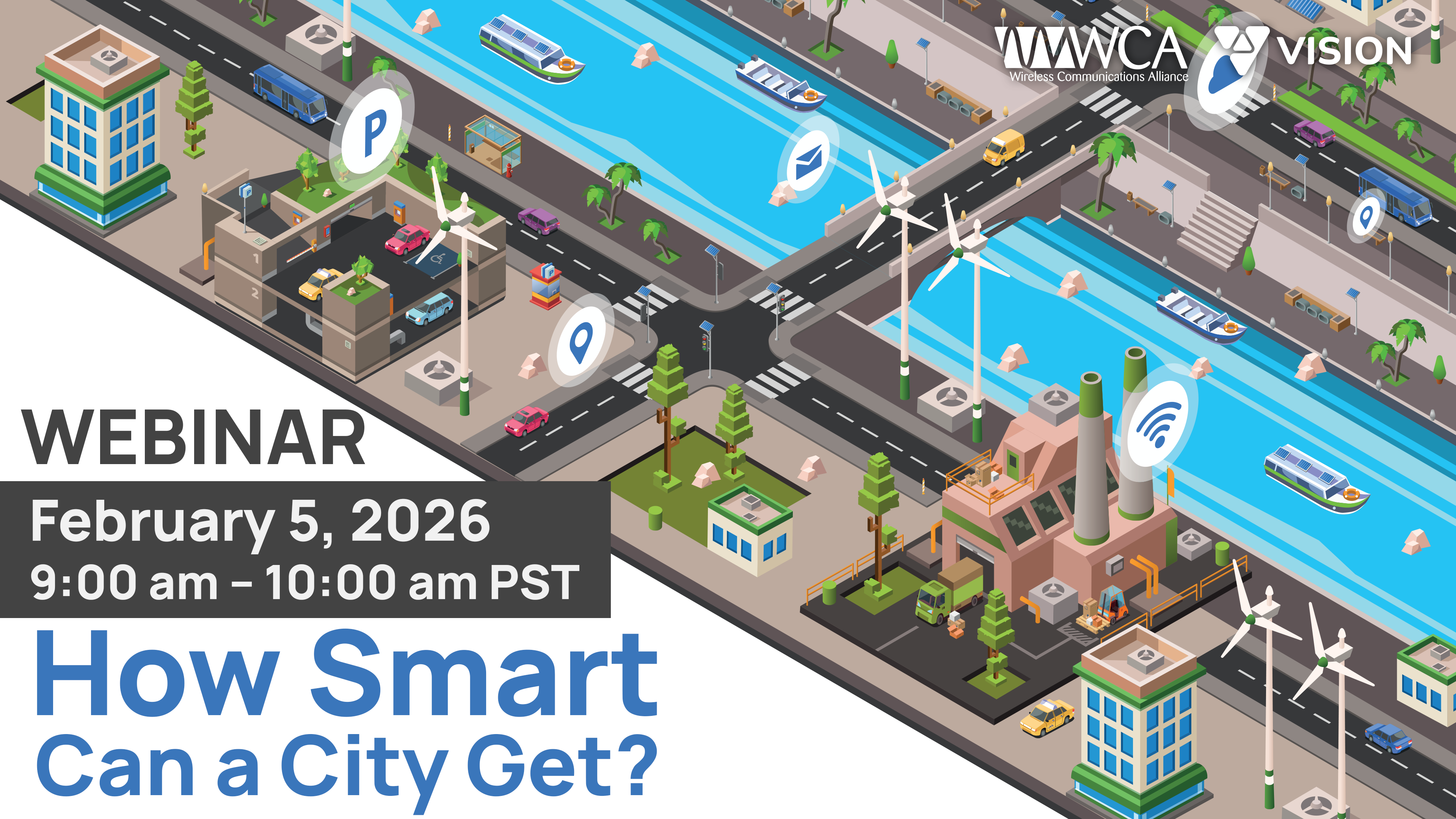
This webinar explores how future-ready smart cities can withstand rapid growth, crises, and uncertainty through technologies like mesh networks, offline-first infrastructure, sovereign data control, and crisis-resilient systems. You’ll also learn about AI-powered traffic signals and the human-centered WISE Cities framework. Ideal for city planners, technologists, and policymakers shaping the urban future.
Vision at the Forefront of Smart City Innovation
On February 6, Daniel Matea, Founder of Vision Technology Development, will join the international panel event “How Smart Can a City Get? Join the Innovators Building the Answer”, organized by the World Connectivity Alliance.
The event brings together innovators, technologists, and city leaders to explore how smart cities must evolve — not as demonstrations, but as resilient, sovereign, and human-centered systems.
Event details: How Smart Can a City Get? Join the Innovators Building the Answer
Rethinking Smart Cities for Real-World Complexity
The discussion focuses on how cities can move beyond traditional “smart” implementations and address operational realities such as resilience, autonomy, and long-term sustainability.
Key topics include:
- Mesh Cities & Offline-First Infrastructure → local networks and offline-first design ensure continuity during outages, enabling cities to function even when central systems are unavailable.
- From Smart to Sovereign Cities → a shift toward data ownership, transparency, interoperability, and reduced dependency on proprietary platforms or vendor lock-in.
- Dark Smart Cities → designing urban systems that remain operational during blackouts, extreme climate events, or cyber incidents — prioritizing crisis readiness over demos.
- Multi-Modal Intelligent Traffic Signal Systems (MMITSS) → intelligent, networked intersections improve traffic flow, road safety, public transport efficiency, and reduce emissions.
- WISE Cities → strategies centered on Wellbeing, Inclusivity, Sustainability, and Evidence of economic growth to ensure measurable societal value.
Vision’s Perspective: Infrastructure That Holds Up Under Pressure
Vision’s participation reflects its concrete work on building resilient digital infrastructure for smart and sovereign cities through the Vision Smart Platform.
At the core of the platform is a hybrid mesh network architecture, designed to ensure continuity, autonomy, and interoperability across urban systems. By combining centralized components with decentralized, peer-to-peer capabilities, the platform helps critical services remain operational even during network outages, blackouts, or large-scale disruptions.
The hybrid mesh model enables local nodes to communicate and function independently when connectivity to central systems is unavailable, while seamlessly reintegrating once connectivity is restored. This approach supports:
- Offline-first operation for critical services.
- Reduced dependency on single points of failure.
- Greater local control over data flows and system behavior.
Vision Smart Platform is designed to support complex smart city use cases — from mobility and traffic management to public services and urban monitoring — while aligning with sovereign city principles, including data ownership, interoperability, and avoidance of vendor lock-in.
Conclusion
Smart cities cannot be defined by what works on a good day. The next phase is about resilient, sovereign infrastructure that keeps services running when conditions are uncertain. By advancing hybrid mesh architectures and offline-first design, Vision contributes to smart cities that are not only connected, but robust, adaptive, and trustworthy.